
Maintaining Research Quality, LPPM Unhas Conducts MONEV for the Third Wave of the First Year of the RIIM Scheme
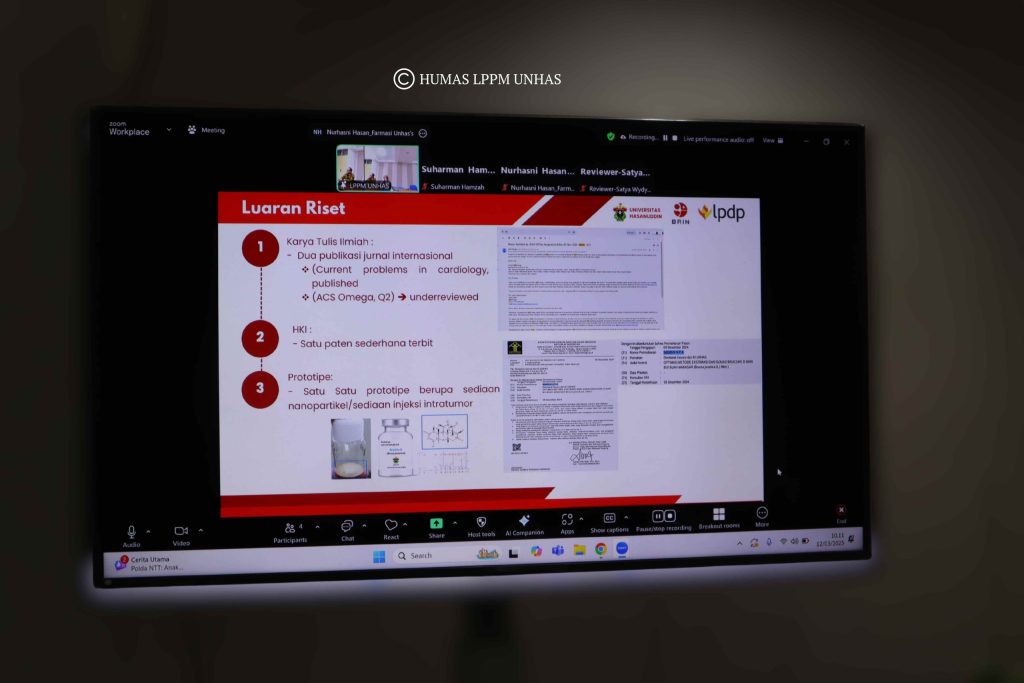
Makassar, Wednesday, March 12, 2025 – The Institute for Research and Community Service (LPPM) of Hasanuddin University (Unhas) once again held a Monitoring and Evaluation (Monev) of the Third Batch of the Advanced Indonesian Innovation Research Scheme (RIIM) for the first year. The event took place in Meeting Room A of the LPPM Unhas building as part of efforts to ensure that research is carried out according to plan and contributes significantly to the development of science and the welfare of society.
As in previous implementations, this Monev focused on financial reports and research output substance. From a financial perspective, an audit was conducted on the use of research funds to ensure transparency and accountability. Meanwhile, the substance aspect was reviewed to assess research progress, publication quality, and its relevance to the needs of society and industry.
This third wave involved researchers from the field of health, particularly from the Faculty of Medicine, including Prof. drg. Muhammad Ruslin, M.Kes., Ph.D., Sp.BM(K) and Prof. Dr. dr. Anis Irawan Anwar, Sp.D.V.E, Subsp.O.B.K, FINSDV, FAADV. To ensure objectivity and quality of evaluation, this monitoring and evaluation session featured two independent reviewers tasked with assessing the substance of the research, as well as a financial team that conducted an audit of fund management. This performance indicator-based evaluation is expected to serve as a means of guidance for researchers in improving the quality of research and the effectiveness of research resource utilization.
LPPM Unhas emphasizes that this monitoring and evaluation is part of efforts to strengthen the quality of research that is solution-oriented and relevant to challenges in the health sector. Through a systematic evaluation approach based on clear performance indicators, LPPM Unhas ensures that each research project not only contributes to the advancement of scientific knowledge but also has a tangible impact in supporting medical innovation, health policies, and improved services for the community.
| S | S | R | K | J | S | M |
|---|---|---|---|---|---|---|
| 1 | 2 | 3 | 4 | |||
| 5 | 6 | 7 | 8 | 9 | 10 | 11 |
| 12 | 13 | 14 | 15 | 16 | 17 | 18 |
| 19 | 20 | 21 | 22 | 23 | 24 | 25 |
| 26 | 27 | 28 | 29 | 30 | 31 | |