
Building Synergy, LPPM Unhas Holds Hearing with East Luwu Regency Government
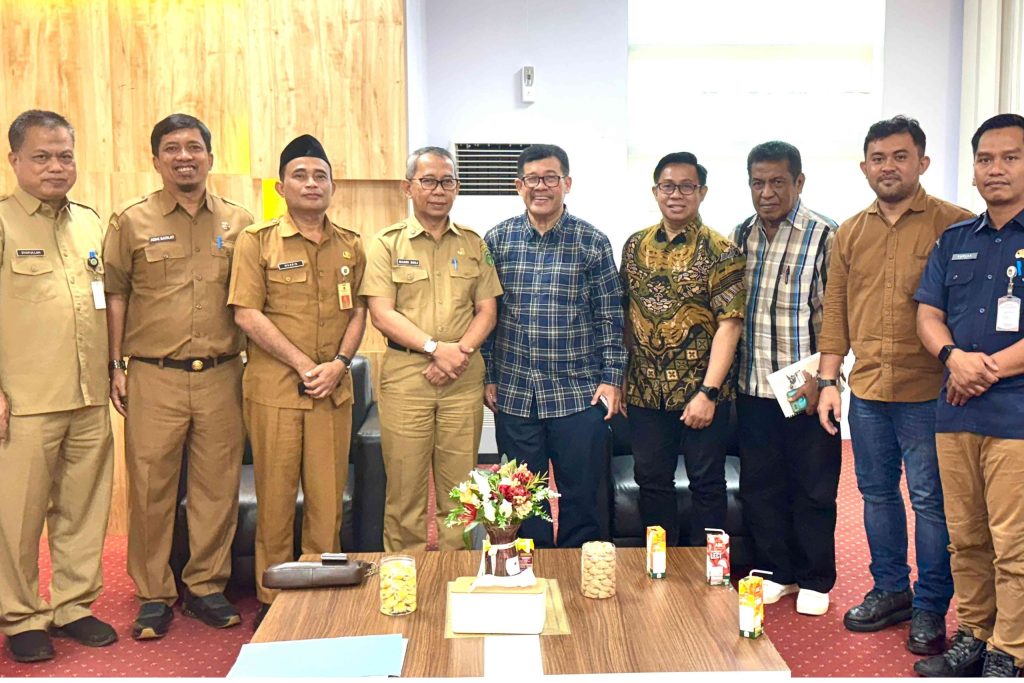
Tuesday, April 15, 2025 – The Institute for Research and Community Service (LPPM) of Hasanuddin University has once again expanded its strategic cooperation by establishing coordination with the East Luwu Regency Government. The hearing held on Tuesday, March 15, 2025, was the first step in building research-based collaboration and community service in line with regional development needs.
The LPPM Unhas delegation was led by Dr. Muhammad Iqbal Latief as Head of the Public Opinion Research Center, accompanied by the Head of the LPPM Administration and a number of staff. The visit was warmly welcomed by the Regional Secretary of East Luwu, Bahri Suli, along with regional officials, including the Secretary of Bappelitbangda, Acting Head of the Communication and Information Agency, Acting Head of the Library and Archives Agency, and representatives from the Regional Secretariat.
As reported by the media outlet Warta Lutim, majesty.co.id, in his speech, the Regional Secretary of East Luwu expressed his appreciation for the initiative of LPPM Unhas, which is considered strategic in supporting research-based policy formulation.
“We welcome the presence of LPPM Unhas. We believe that this collaboration can give rise to programs that directly respond to the needs of the community. We hope that this synergy can be directed and supported through Bappelitbangda so that it is in line with the vision and mission of regional development,” said Bahri Suli.
In response, Dr. Iqbal Latief said that this audience was part of LPPM Unhas’ commitment to strengthening the role of the university as a strategic partner of the local government.
“We greatly appreciate the welcome given by the Luwu Timur Regional Government. Through this collaboration, we hope to implement research and community service programs that have a direct and sustainable impact, especially for the 2025 fiscal year,” he said.
Through this audience, LPPM Unhas continues to demonstrate its commitment to being an institution that is not only oriented towards the development of science but also plays an active role in collaborative regional development.
| S | S | R | K | J | S | M |
|---|---|---|---|---|---|---|
| 1 | 2 | 3 | 4 | |||
| 5 | 6 | 7 | 8 | 9 | 10 | 11 |
| 12 | 13 | 14 | 15 | 16 | 17 | 18 |
| 19 | 20 | 21 | 22 | 23 | 24 | 25 |
| 26 | 27 | 28 | 29 | 30 | 31 | |