
LPPM UNHAS Holds Focus Group Discussion (FGD) on Research and Community Service Policy Direction for Hasanuddin University Grants T.A 2025
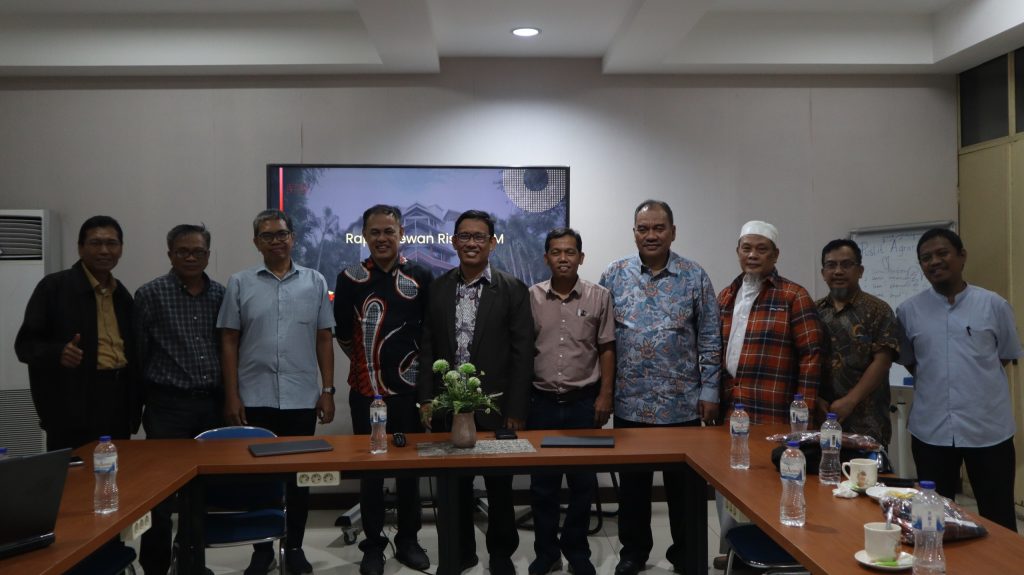
Thursday, December 19, 2024 – The Research and Community Service Institute (LPPM) of Hasanuddin University (UNHAS) held a Focus Group Discussion (FGD) aimed at discussing the policy direction for research and community service concerning the Hasanuddin University Grants for the Fiscal Year (T.A) 2025. The FGD took place in the LPPM UNHAS meeting room and was attended by a number of lecturers, researchers, and research council members from various faculties within UNHAS.
This activity was carried out as an effort to formulate a more focused strategic plan for the development of research and community service that can provide tangible contributions to community and regional development.
Furthermore, the FGD also aimed to enhance the quality and relevance of research and community service funded by the grants provided by the university.
In his address, the Head of LPPM UNHAS, Prof. Dr. Muh. Nasrum Massi, Ph.D., Sp.Mk(K), stated that the policy direction for research and community service for T.A 2025 will focus more on topics that have a direct impact on solving societal problems, especially in the aspects of economy, health, education, and environment.
He also emphasized the importance of synergy among the academic world, the government, and the private sector in supporting these research and community service activities.
“As a higher education institution, UNHAS is committed to continuing to play an active role in advancing the quality of research and community service that not only meets academic standards but also provides ** practical benefits for the wider community**,” stated Professor Nasrum.
During the FGD session, participants were given the opportunity to engage in interactive discussions, provide input, and formulate new ideas regarding the policy direction for research and community service to be implemented in 2025.
Key topics discussed included enhancing inter-disciplinary collaboration, strengthening local problem-based research, and the application of technology in community service activities.
In conclusion, LPPM UNHAS hopes that the outcome of this FGD can serve as a reference point for formulating grant policies that are more innovative, effective, and high-impact, thereby realizing the UNHAS vision as a leading university contributing to national development and community welfare.
This activity is expected to provide direct benefits for the development of research and community service at UNHAS, and to strengthen the university’s position as an institution that produces sustainable research and innovation.
| S | S | R | K | J | S | M |
|---|---|---|---|---|---|---|
| 1 | 2 | 3 | 4 | |||
| 5 | 6 | 7 | 8 | 9 | 10 | 11 |
| 12 | 13 | 14 | 15 | 16 | 17 | 18 |
| 19 | 20 | 21 | 22 | 23 | 24 | 25 |
| 26 | 27 | 28 | 29 | 30 | 31 | |