
Strengthening Research Culture, LPPM Unhas Encourages Collaboration Among Young Lecturers
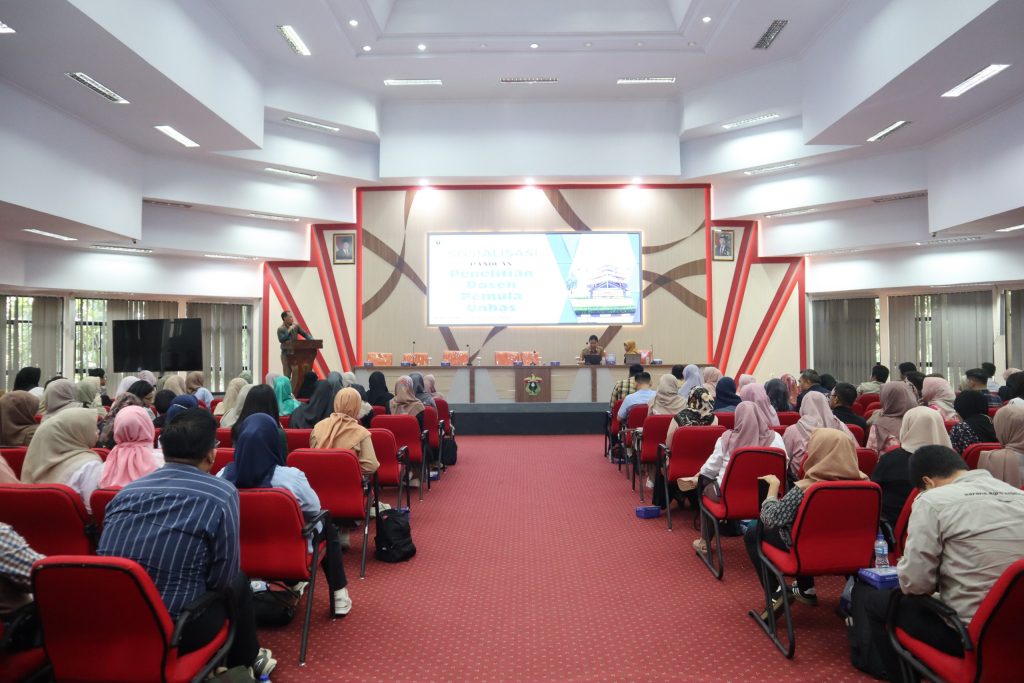
Saturday, February 22, 2025 – The Institute for Research and Community Service (LPPM) at Hasanuddin University continues to strive to strengthen the culture of research among young academics. Through a research seminar entitled “Exploring Research Ideas and Enhancing Research Collaboration for New Lecturers,” this activity provides a space for young lecturers to develop their research potential, build collaborations, and understand research funding opportunities.
This seminar featured three senior academics who have been active at the national and international levels, namely Prof. Dr. Ir. Siti Halimah Larekeng, S.P., M.P., Prof. Dr. Halmar Halide, M.Sc, and Prof. Dr. Dahlang Tahir, S.Si., M.Si. The three shared their experiences and strategies in producing quality research and encouraging novice lecturers to be more active in scientific publications.
In addition to presentations, this seminar also scheduled interactive discussions on three main topics, namely Artificial Intelligence Applications in Multidisciplinary Research, Writing Attractive and Competitive Research Proposals, and Research Collaboration for Beginning Lecturers. These topics were designed to equip young lecturers with insights and skills in conducting relevant and impactful research.
In addition to discussing research strategies, this seminar also served as a forum for socializing the Early Career Faculty Research Scheme, a program aimed at young lecturers to obtain funding support and assistance in developing their research. The Head of LPPM Unhas emphasized that research is a crucial element in the Tri Dharma Perguruan Tinggi (Three Pillars of Higher Education), which must be carried out in tandem with teaching and community service.
With this seminar, young lecturers at Unhas are expected to be more confident in initiating research and building broader collaborative networks. LPPM Unhas is committed to continuing to support the development of young academics so that they can contribute to the advancement of science and innovation, both nationally and globally.
| S | S | R | K | J | S | M |
|---|---|---|---|---|---|---|
| 1 | 2 | 3 | 4 | |||
| 5 | 6 | 7 | 8 | 9 | 10 | 11 |
| 12 | 13 | 14 | 15 | 16 | 17 | 18 |
| 19 | 20 | 21 | 22 | 23 | 24 | 25 |
| 26 | 27 | 28 | 29 | 30 | 31 | |